In Shaivam philosophy, Eshwara and Parvathi represent two complementary forces or perspectives that guide the cosmos and human life. These two perspectives offer a profound understanding of the nature of existence, consciousness, and the dynamic interplay between creation and sustenance. Far from being merely theological figures, they are best understood as living archetypes — maps of the two fundamental orientations that every human being must integrate to live fully.
Eshwara — Form & Detachment
Pure awareness without attachments. The creator who sets nature into motion but remains transcendent. Represents Rupam — the perceivable, structured foundation of existence.
Parvathi — Formlessness & Connection
Awareness deeply connected to nature. The sustainer who maintains the balance of the cosmos through nurturing engagement. Represents Arupam — the formless, animating force within existence.
Eshwara: The Perspective of Form and Detachment
Eshwara, often depicted as the creator and cosmic force with form (Rupam), symbolises pure awareness without attachments. This aspect represents the transcendental reality that exists beyond individual desires, emotions, or material connections. Eshwara, as the creator, sets nature into motion, providing the foundation for existence — but remains detached from the ongoing dynamics within it.
Awareness without Attachments: Eshwara embodies a state of being where one is fully aware but not influenced by the external world. This state of detachment allows for clear perception and action without being swayed by emotional or material concerns. It is not indifference — it is the clarity that comes from standing at the source rather than being swept along by the current.
Creation of Nature: Eshwara's role is to initiate the cosmic cycle, bringing forth the elements of nature, but not intervening in their continuous evolution. In this sense, Eshwara represents a higher level of consciousness — one that directs the flow of the universe without becoming entangled in it. The framework is given; the living is left to the living.
Learn and Take Action: From the perspective of Eshwara, learning comes before action. Through observation and understanding, one is prepared to act decisively — but always with a sense of detachment from the results. The outcome does not disturb the awareness that produced the action.
"Eshwara does not withhold from the world — he provides the very ground on which the world stands. His detachment is not absence but the deepest form of presence."
Parvathi: The Perspective of Formlessness and Connection
Parvathi, in contrast, represents the formless (Arupam) and the force of creation with attachments to nature. Parvathi's energy is seen as the nurturing and sustaining power that maintains the balance of the cosmos by being deeply connected to the world. She is not outside looking in — she is woven into the very fabric of what she sustains.
Awareness with Attachments: Unlike Eshwara's detachment, Parvathi's perspective involves awareness that is intrinsically connected to nature and its creations. Parvathi embodies the emotional, nurturing, and protective aspects of existence, where attachment plays a role in maintaining harmony within the world. To care deeply is not a weakness but a sustaining force.
Maintainer of Nature: While Eshwara creates, Parvathi sustains. Her connection to nature allows for the ongoing cycle of life, death, and rebirth to continue, ensuring that the world remains in balance. Without this sustaining engagement, the structure that Eshwara provides would remain empty — an architecture without inhabitants.
Take Action and Learn: Parvathi's approach to existence is more intuitive and experiential. By acting and engaging with the world, one learns and evolves. This perspective emphasises the importance of being fully immersed in life's experiences to gain knowledge and wisdom. The lesson comes through living, not only through prior understanding.
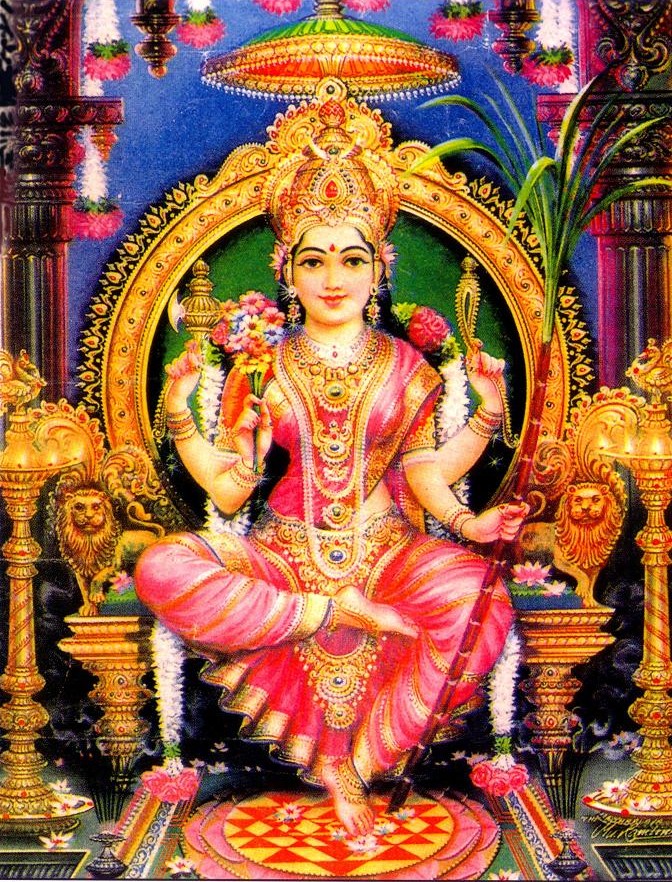
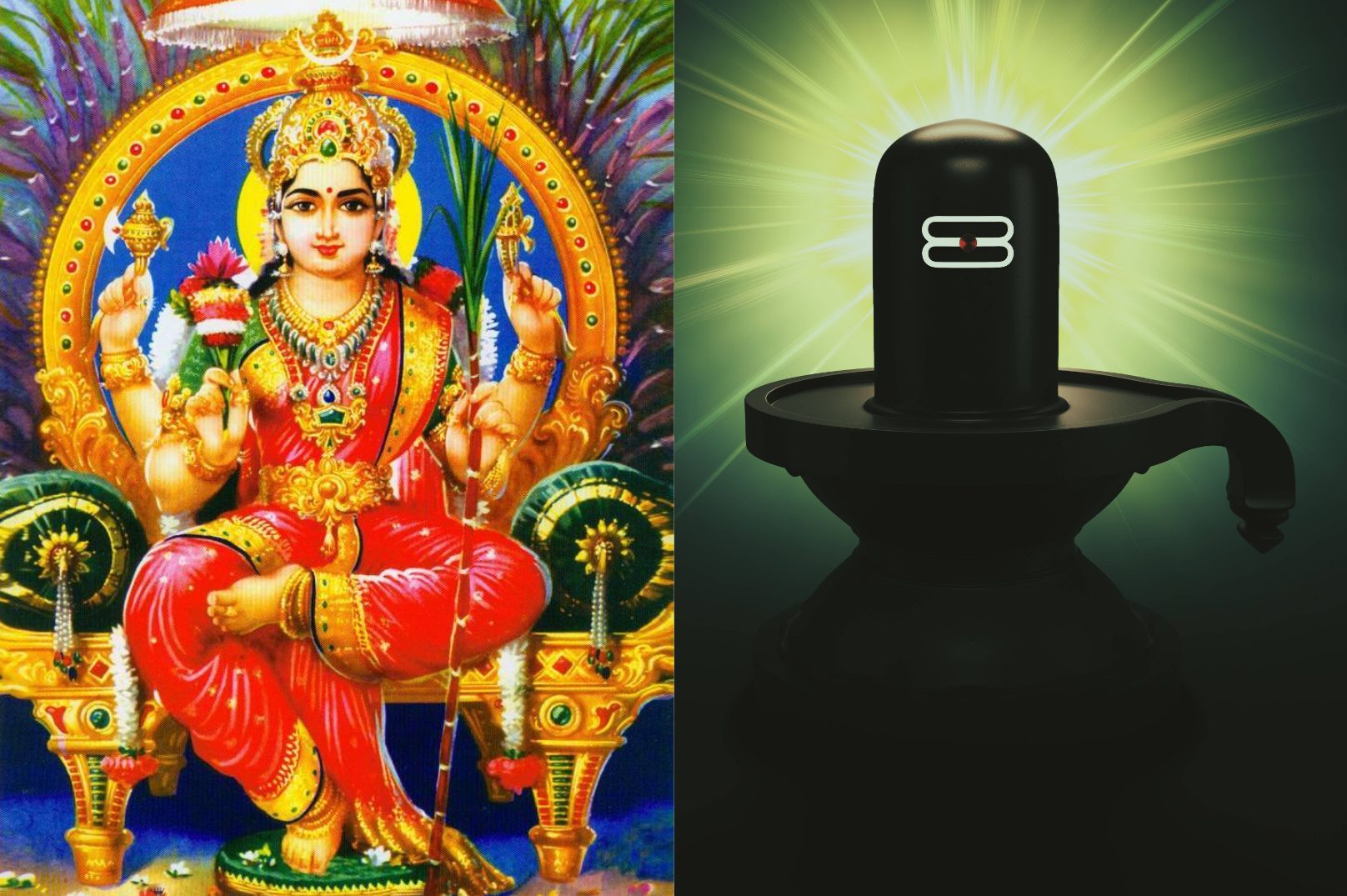
"The glitter of Lalitha belongs to Parvathi's domain — the luminous quality of a present moment fully inhabited, where learning happens through love rather than distance."
The Interplay of Eshwara and Parvathi
These two perspectives, though distinct, are interconnected and complementary. Eshwara provides the foundation and structure, while Parvathi animates, sustains, and nurtures within that framework. Together, they represent the complete cycle of creation, action, learning, and sustenance.
The Two Dimensions of Reality
- Eshwara as the Framework — The rules of nature, the cosmic order, and the underlying laws of existence. He represents the boundaries within which all things occur.
- Parvathi as the Experience — Within these boundaries, Parvathi represents the experience of life itself. It is through emotional connection, attachment, and action that we truly engage with life.
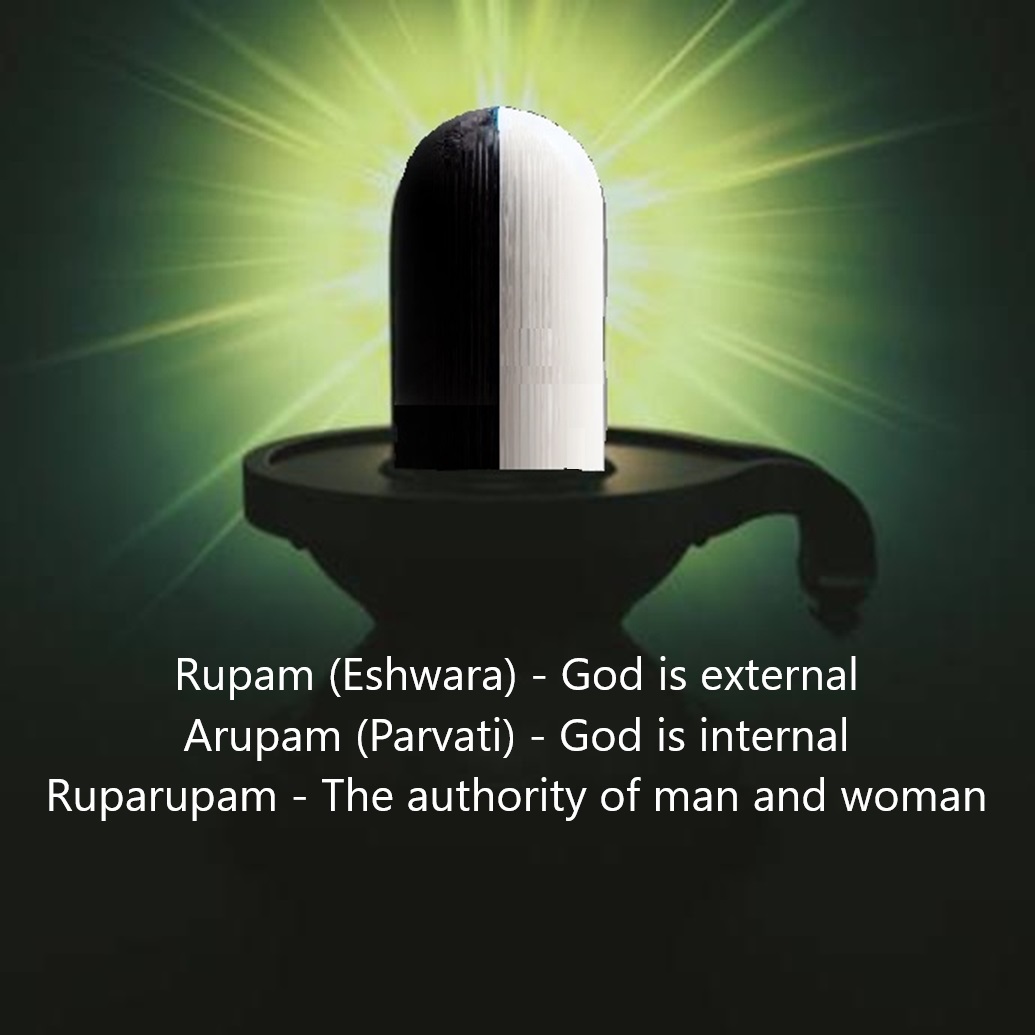
The lingam — made of half-white and half-black stone in many temples — is Shaivam's most direct symbol of this unity. It does not depict Eshwara and Parvathi as separate and adjacent but as literally inseparable: two qualities of a single reality. To understand one without the other is to hold only half the truth.
Why Parvathi's Perspective Is Essential for Human Life
While Eshwara provides the structural understanding of the universe, Parvathi's perspective is what makes life meaningful for human beings. Living within the confines of Eshwara's creation, humans must engage with life, form attachments, and learn through their actions. Parvathi's approach is one that resonates deeply with the human experience — where connection, emotion, and engagement with the world are central to growth and fulfilment.
A life lived entirely from Eshwara's perspective — detached, observing, unmoved — would miss the very texture of human existence: the grief that teaches compassion, the love that teaches sacrifice, the failure that teaches resilience. These are Parvathi's lessons, and they are not supplementary to wisdom but constitutive of it.
In essence, while Eshwara represents the overarching, detached awareness, Parvathi is the vital force that sustains life — teaching that true understanding comes from living, acting, and learning. Together, they offer a holistic view of existence: one that balances detachment and engagement, form and formlessness, learning and action. Neither is higher; both are necessary. This is the divine partnership — not a story about two deities, but a map of the two modes of consciousness that every human being must learn to hold together.