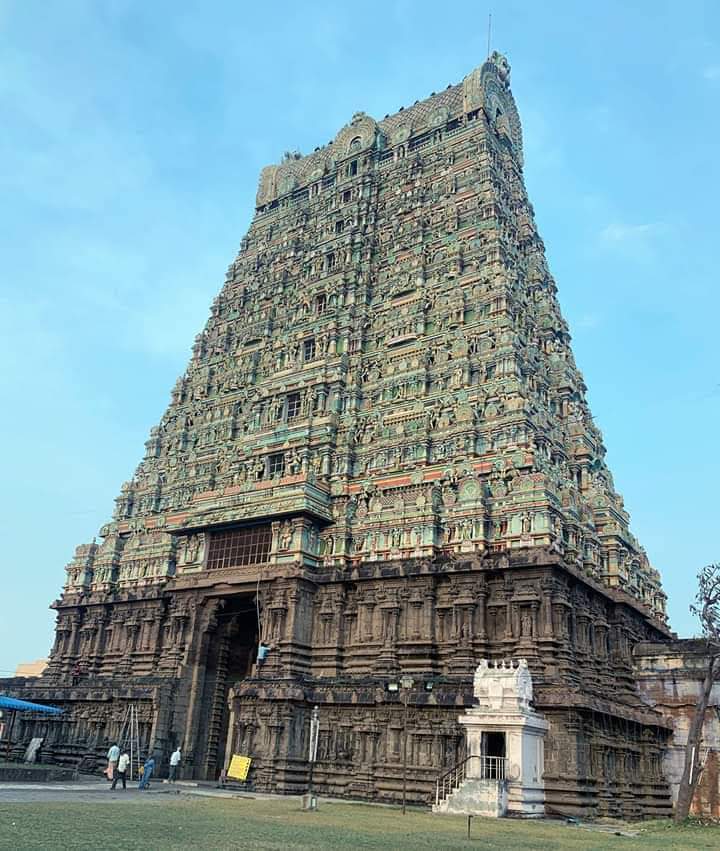
Seven luminous shrines — each a doorway into a distinct facet of the divine, each a teaching made of stone, water, fire, and devotion
Temples, in the Shaivam tradition, are more than places of worship — they are carefully designed spaces of convergence, where the most fundamental dualities of human consciousness meet, integrate, and mutually reinforce one another. These convergences are not accidental features of temple design but represent the deliberate architectural, ritual, and symbolic embodiment of Shaivam's core philosophical principles. Four convergences lie at the heart of what every temple embodies.
Tri-Margam — the path of faith and devotion — orients the seeker toward Viswesam, the foundational truth accepted as a living conviction. Soujanya-Margam — the path of reasoning and inquiry — engages Eshwaram, the domain of lived experience where truth is continuously tested and deepened through action and reflection. Many traditions force a choice between faith and reason. The temple refuses this false dichotomy. Within its sacred space, both the devotee who comes with pure devotion and the seeker who arrives with questions find their approach honoured — faith deepened by understanding, understanding grounded by faith.
Viswesam is the domain of the unchanging — archetypes and foundational truths that do not alter with time or circumstance. Eshwaram is the domain of continuous engagement — lived experience where understanding is refined through action, inquiry, and growth. In ordinary life these can feel disconnected: what we believe in principle and what we do in practice seem to occupy separate spheres. The temple bridges this gap. The inner sanctum (Viswesam) and the outer rituals and offerings (Eshwaram) are in constant dialogue. In the moment of darshan — seeing and being seen by the deity — what is eternal and what is immediate become one.
"Shaivam is the constant pursuit of what we believe." The temple is the physical and spiritual embodiment of this principle. It preserves what we believe — the values, archetypes, and truths encoded in deity, architecture, and ritual story — while simultaneously sustaining the constant pursuit through community practice, inquiry, and lived engagement. Belief without pursuit becomes rigid dogma, disconnected from life. Pursuit without belief becomes aimless wandering, lacking orientation. The temple demonstrates how to hold both: to maintain deep conviction while remaining open to ever-deeper understanding, to honour the tradition while embracing the growth that living inevitably brings.
Have we already arrived, or are we still on the way? This is not a trick question — it is the paradox at the heart of genuine practice. The temple holds both truths simultaneously. In pradakshina (circumambulation), the devotee completes a full circuit and returns to the starting point — genuinely arrived. Yet they begin again. Each completion is real; no completion is final. Each realization opens new horizons and deepens the capacity for further pursuit. The temple teaches that there is no contradiction between celebrating how far we have come and acknowledging how much remains — both are expressions of the same sincere engagement with truth.
Seven sacred temples stand as the living expressions of all four convergences — spaces where Tri-Margam and Soujanya-Margam flow together, where Viswesam meets Eshwaram, and where the constant pursuit of what we believe is given form, community, and enduring expression across generations.
Varanasi (Kashi), Uttar Pradesh
Kashi Vishwanath — Visweswaram, the Lord of the Universe — stands at the very edge of time and form. One of the twelve sacred Jyotirlingas, this shrine in Varanasi represents Shiva not as a deity with attributes but as pure, self-luminous consciousness: the light that illumines all things without itself being lit by anything else.
Varanasi (Kashi) holds a singular place in Shaivam philosophy. It is said that Shiva himself whispers the Taraka Mantra — the mantra of liberation — into the ears of every being who dies within the city's sacred boundaries, cutting the cycle of rebirth at its root. This reflects a profound philosophical principle: liberation is not earned through effort alone but is ultimately an act of grace, available to all who are present with open awareness.
The element associated with Visweswaram is Akasha — space, the subtlest of the five elements and the medium through which all sound, thought, and consciousness travel. Space does not resist anything. It contains everything without being diminished or defined by it. This is the first teaching of Shaivam: the ground of being is boundless, untouched, and ever present — regardless of what arises within it.
"Before creation, between creations, and beyond all creation — Consciousness alone remains. Kashi is that Consciousness wearing the city as its body."
— The Kashi Khandam, Skanda Purana
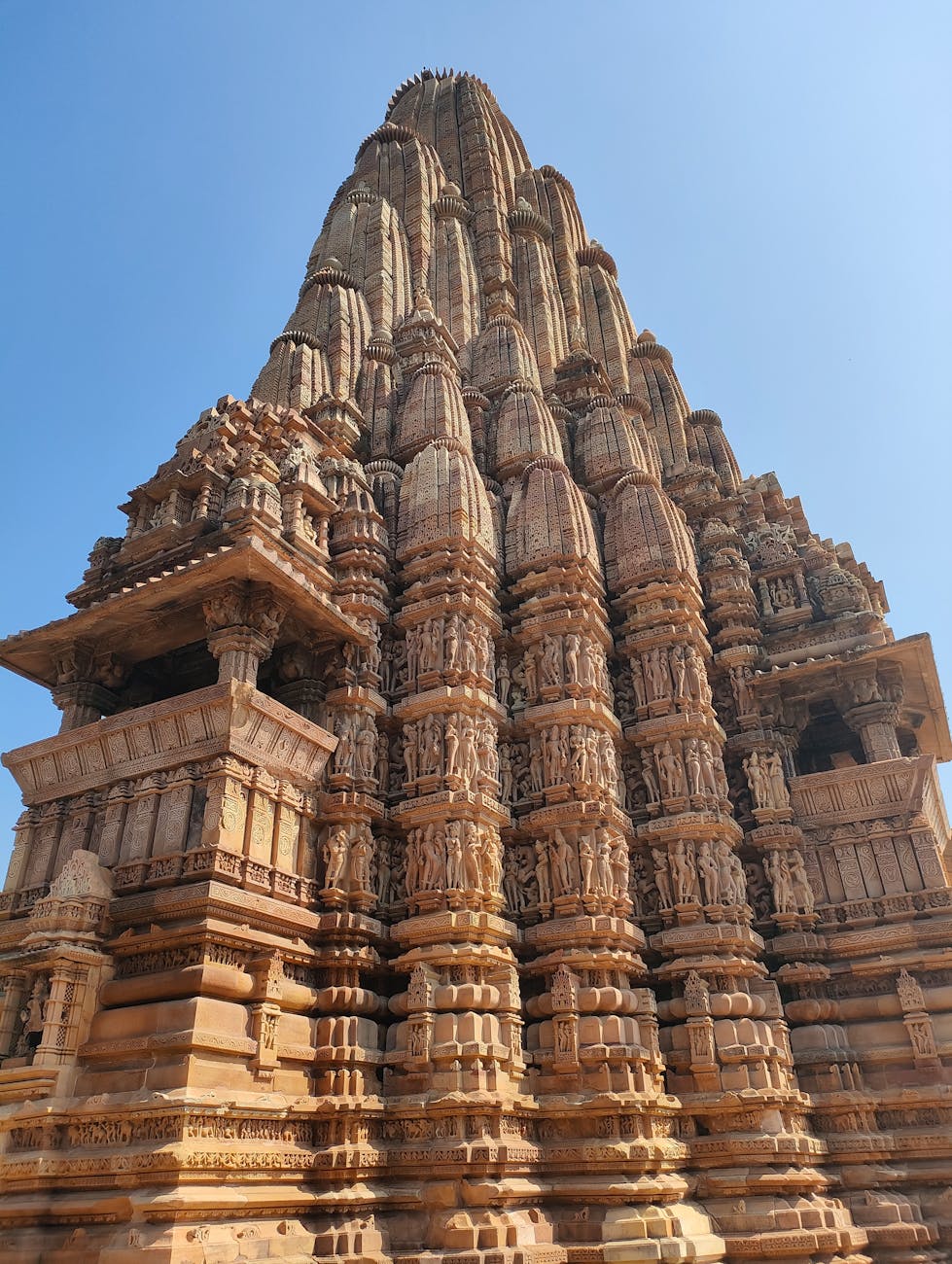
Thiruvanaikaval, Tiruchirappalli, Tamil Nadu
Within the great compound of Thiruvanaikaval rises the Jambukeshwaram temple — home to one of the five Pancha Bhuta Stalas, the elemental shrines sacred to Shaivam. Here, the presiding linga rests partially submerged within a natural underground spring, and the element is Apah — water, the principle of fluidity, nourishment, and yielding intelligence.
What makes Jambukeshwaram philosophically radical is the equal prominence of the goddess Akilandeswari — She Who Rules the Universe — beside the Shiva linga. According to Shaivam tradition, it was Parvati herself who came to Jambukeshwaram in penance, fashioning a linga from the river clay and meditating beside it. The Divine Feminine is not subordinate here; she is the one who initiates, who seeks, who practices. The teaching is clear: the path of philosophy is not the domain of one gender, one caste, or one calling — it belongs to the sincere.
Water, in Shaivam philosophy, is the model of wisdom in action. It flows around every obstacle without surrendering its nature. It takes the exact shape of whatever contains it — and yet it remains, fundamentally and unchangeably, water. The seeker who embodies Apah adapts to every circumstance, every relationship, and every phase of life without losing the essential thread of awareness that runs through all of it.
"The deepest wisdom does not insist on its own form. Like water, it finds its level — and in finding its level, it finds everything."
— Shaivite Philosophical Tradition
Thanjavur, Tamil Nadu
Built in 1010 CE by the great Chola emperor Raja Raja I, Brihadeshwaram — the Temple of the Great Lord — stands as perhaps the most complete expression of the Shaivam Goal Achievement Cycle made visible in stone. Its vimana (tower) soars to 66 metres, the tallest in the world at the time of its construction — an act of architectural daring that had never been attempted before and would not be surpassed for centuries.
Every proportion of Brihadeshwaram was calculated according to the Agama Shastra — the sacred texts of temple science. The shadow of its tower, it is said, never falls upon the ground, pointing skyward perpetually as if to say: the aspiration of a life fully devoted does not cast a shadow of incompleteness. It reaches. It rises. It is its own justification.
This temple embodies the teaching that the highest expression of the Eshwara Janmam — the phase of creation and worldly manifestation — is the complete offering of one's gifts to the divine. Raja Raja did not build Brihadeshwaram to glorify himself. He built it because he understood that the greatest thing a human being can do with their talents, wealth, and vision is to lay them at the feet of something larger than the self. In this, the act of building becomes the act of surrender.
"The greatest monument is not what you build — it is the quality of consciousness you bring to the building. Every stone placed in love becomes a prayer."
— Shaivam Philosophy on Purposeful Action
Tiruvannamalai, Tamil Nadu
The Arunachala hill at Tiruvannamalai is not the backdrop to the Arunachaleshwaram temple — it is the temple. Shaivam tradition holds that Arunachala is Shiva himself, standing in the form of a mountain of fire (Agni), the red hill whose name means "the dawn of wisdom." This is the fire Pancha Bhuta Stala, and its teaching is the most demanding: the self that you believe yourself to be must be offered to the flame.
It was at the feet of Arunachala that the sage Ramana Maharishi arrived at age sixteen and never left. He declared the mountain his guru — not metaphorically but literally. For 54 years he lived in its presence, teaching the one question that could dissolve all other questions: "Who am I?" This practice of Atma Vichara — self-inquiry — is the fire of Arunachala internalized. It does not accumulate knowledge; it burns away everything that is not knowledge.
Every year during the festival of Karthigai Deepam, a great beacon of fire is lit at the summit of the hill, visible for miles across the Tamil plains. For one night, the hill is the sun. This is the Shaivam teaching made luminous: each human life, at its pinnacle of sincerity and self-knowledge, becomes a light that others can see their way by, not through instruction, but through the sheer clarity of a life lived in undeceived awareness.
"The hill does not seek enlightenment — it IS enlightenment. What you have been seeking with such effort has always been the one doing the seeking."
— Ramana Maharishi on Arunachala
Madurai, Tamil Nadu
Sundareshwara — the Beautiful One, the Lord of Beauty — is Shiva in his most intimate and beloved form: the divine bridegroom who descends to wed Meenakshi (Parvati) in the sacred city of Madurai. In the vast Meenakshi Amman temple complex, the presiding deity is not only Shiva but Meenakshi herself — the fish-eyed goddess who conquered the world through her fierce, unstoppable grace. Shiva is here in his most radiant, most accessible aspect.
The theological significance of Sudareshwaram is the recognition that the divine is not cold, distant, or philosophical in any abstract sense — it is beautiful. It desires. It chooses union. In Shaivam tradition, the cosmic marriage of Sundareshwara and Meenakshi is not a metaphor for something else; it is the thing itself. Love — at its most complete, most devoted, most unconditional — is a direct experience of the divine. The path of Bhakti here is not subordinate to wisdom or action; it is their consummation.
The Ayiramkaal Mandapam (Hall of a Thousand Pillars) at Madurai is one of the most extraordinary achievements of South Indian temple architecture. Each pillar rings with a different musical note when struck. The teaching is architectural: in a life of true devotion, every single aspect — every relationship, every task, every conversation — is tuned to the divine frequency. Nothing is excluded from the temple. Everything is sacred.
"You cannot think your way to the divine. You can only love your way there — and love does not require preparation. It requires only the willingness to be moved."
— Tamil Shaivite Bhakti Tradition
Mylapore, Chennai, Tamil Nadu
The name Kapaleeshwara derives from kapala (skull) and Ishwara (Lord) — Shiva as the one who transcends death by wearing its emblem. This is the form of Shiva who broke the fifth head of Brahma, ending the cycle of arrogant creation, and was required to carry the skull as a reminder that even the gods are accountable. In Shaivam philosophy, Kapala is not macabre — it is honest. The skull teaches that every form is temporary; what remains after all forms are exhausted is the awareness that witnessed them all.
The great legend of Kapaleeshwaram involves Parvati. While Shiva was speaking of the deepest philosophical truths, Parvati became momentarily distracted by a pair of peacocks. Shiva withdrew his presence, and Parvati — understanding the gravity of her inattention — took the form of a peacock (mayil) and performed intense penance in Mylapore beneath a punnai tree until Shiva returned to her. This is why peacocks roam the temple precincts to this day.
The teaching of Kapaleeshwaram is perhaps the most compassionate in all of Shaivam: every seeker loses the thread sometimes. Distraction is not the opposite of the spiritual path — returning to the path, again and again, with renewed sincerity, IS the path. Parvati did not remain ashamed. She transformed her lapse into the most devoted practice. The peacock's iridescent plumage is the beauty that comes from honest, earnest return.
"Even the goddess needed to begin again. Every sincere return to practice is as sacred as the first step — perhaps more so, for it is chosen with full knowledge of the cost."
— Shaivam Teaching on Perseverance and Grace
Kanchipuram, Tamil Nadu
Viswesa — the Universal Lord — is the form of Shiva as the ground itself: not the fire of transformation, not the space of pure consciousness, but the patient, sustaining, ever-present foundation upon which all of existence stands. Enshrined at Ekambareshwaram in Kanchipuram, this is the Earth (Prithvi) Pancha Bhuta Stala — and uniquely among all the elemental shrines, the linga here is not carved from stone. It is made from the earth itself — sand from the sacred Ganga, shaped by devotion and rendered permanent through divine grace.
Within the temple's vast courtyard grows a mango tree (Sthala Vriksha) said to be over 3,500 years old — its four branches bearing four different varieties of mango, one for each of the four Vedas. It is under this tree that Parvati came to practise her deepest penance, shaping the earth linga with her own hands. Shiva tested her devotion by causing the sacred Ganga to flood the tank and threaten her offering. She embraced the linga to protect it, refusing to be moved. The waters receded. The earth remained. The goddess remained.
The philosophical teaching of Viswesa is the capstone of the Shaivam journey. All the space of Visweswaram, all the water of Jambukeshwaram, all the fire of Arunachala, all the beauty of Sudareshwaram, and all the transformation of Kapaleeshwaram — these must finally return to the earth. Wisdom is not the escape from embodiment; it is the complete inhabitation of it. To be fully present in the body, in the moment, in the relationship, in the task at hand — this is Prithvi: the final, foundational, most necessary teaching.
"Freedom begins in the body. Ground yourself first — the sky finds those who are rooted. The deepest roots reach the deepest waters; the highest aspirations grow from the most stable ground."
— Ekambareshwaram Temple Tradition, KanchipuramEvery outer temple is the projection of an inner geography. Shaivam has always maintained that the most important pilgrimage is not across the plains of India but through the landscape of your own consciousness. The gopuram is your own entry into sincere attention. The sanctum is the silence at the centre of your awareness. The deity is the recognition of what you have always been.
Visit each of these seven sacred spaces — in person or in contemplation — and ask yourself: which element is most alive in you right now? Where do you need the spaciousness of Kashi, the fluidity of Thiruvanaikaval, the discipline of Thanjavur, the burning clarity of Tiruvannamalai, the openheartedness of Madurai, the humble return of Mylapore, or the steady grounding of Kanchipuram?
The answer is the beginning of your practice.
Explore the Goal Achievement Cycle