In life, there is often a subtle yet profound difference between "what is happening" and "what is existing." This distinction highlights two important concepts: one focusing on effort, intentions, perspectives, and mindsets; the other on outcomes, results, and established states. Understanding this difference allows us to see how intentions can lead to outcomes — but they do not always align perfectly.
This concept is deeply rooted in both everyday life and philosophical thought, shedding light on how intentions shape actions while outcomes reflect the impact of those actions on the world.
What Is Happening — Intention
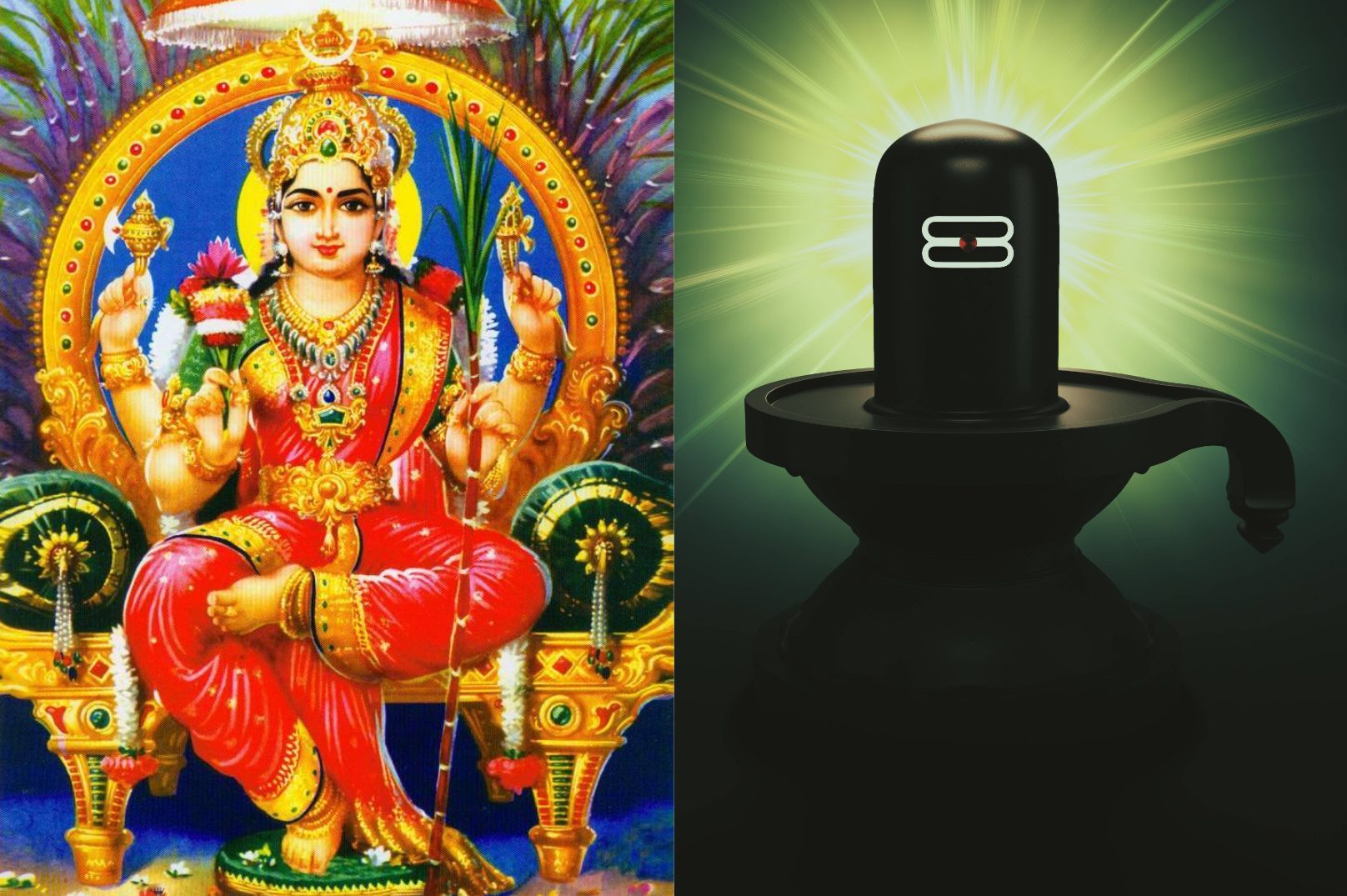
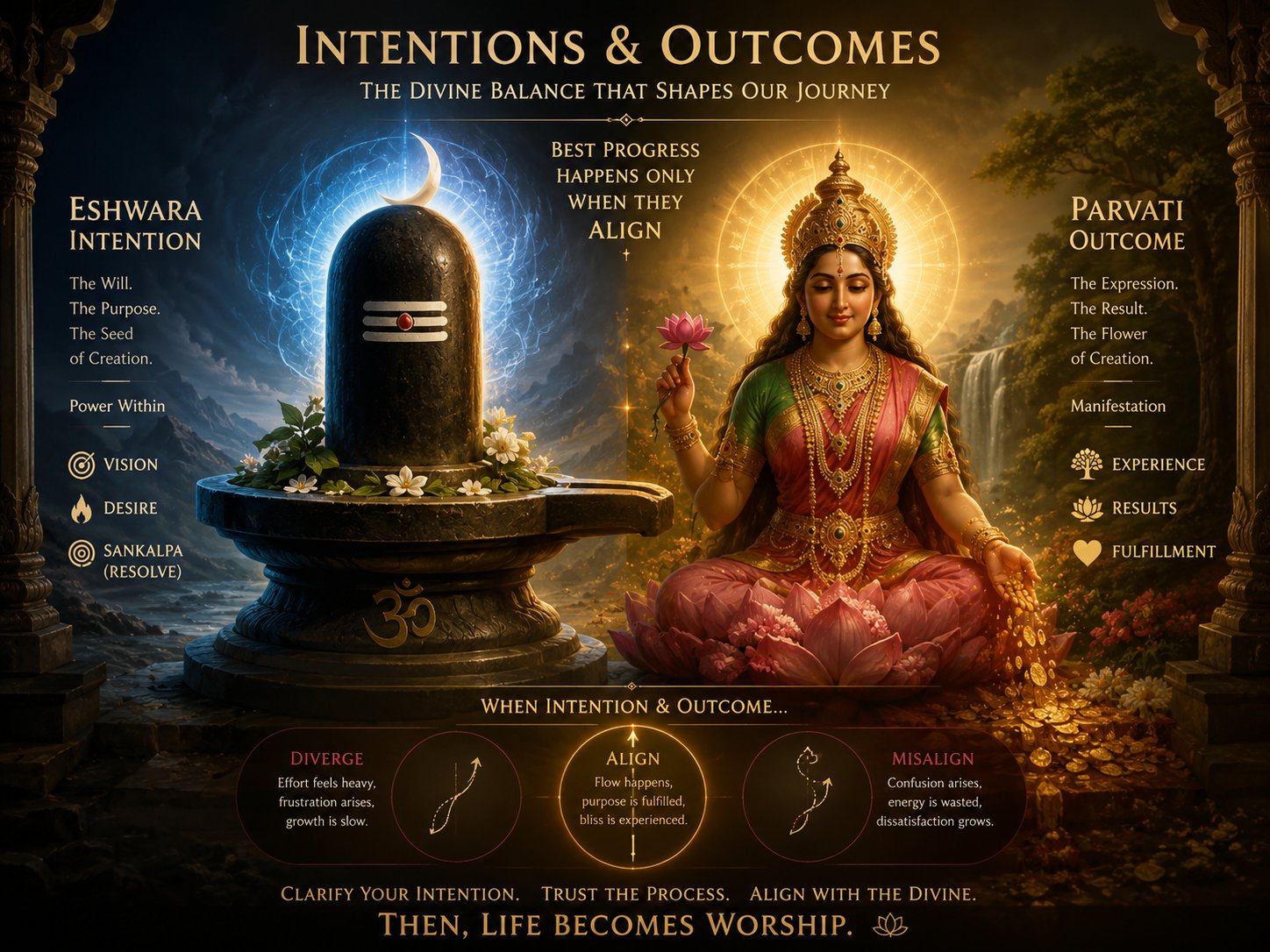
Eshwara
The force of intent, direction, and action. The Will. The Purpose. The Sankalpa. Eshwara steers human beings toward constructive endeavours — the seed from which all creation grows.
What Is Existing — Outcome
Parvati
The protective force that preserves, establishes, and nurtures intentions into tangible outcomes. The Expression. The Result. The Flower of Creation — what blooms from the seed of intention.
Intentions vs. Outcomes: The Case of an Actor
Consider the example of an actor. Their intention might be to earn a living by performing in movies. This drive to make money through acting can be seen as "what is happening" — it is the underlying motivation that fuels their actions. However, "what is existing" in this scenario is the finished product: a well-crafted movie that people can enjoy. The result, or outcome, is the experience of entertainment that refreshes and delights audiences.
Here, the actor's initial intent may not directly correlate with the outcome. While they aimed for financial reward, what came into existence was a positive cultural experience for viewers. This example illustrates how "what is happening" (intention) and "what is existing" (outcome) can either align or diverge — they align when intentions lead directly to the desired outcome, but they diverge when the outcomes are different or even unexpected.
A Philosophical Analogy: Eshwara and Parvati
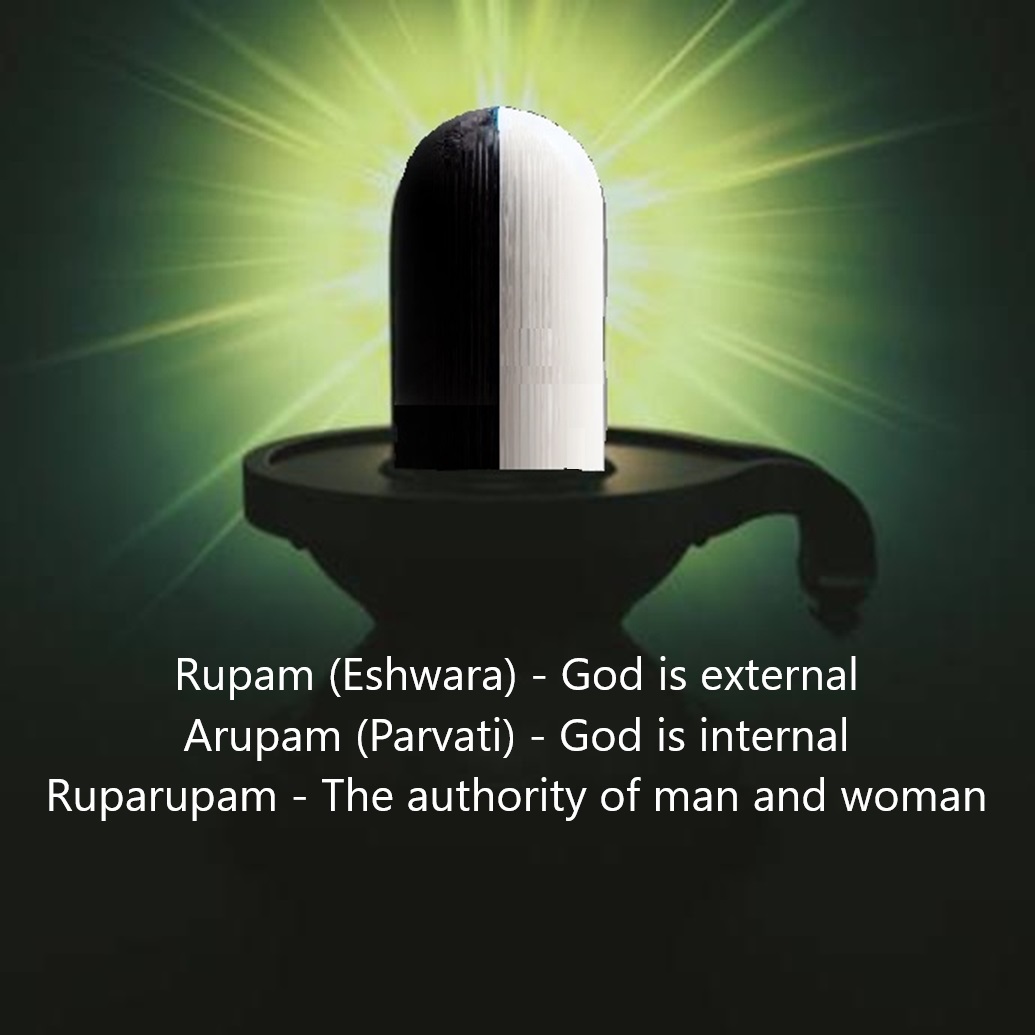
In Shaivam philosophy, this concept is embodied by the figures of Eshwara and Parvati. Eshwara symbolises "what is happening" — the force of intent, direction, and action that guides the universe toward constructive purposes. Parvati, on the other hand, represents "what is existing" — the protective force that preserves, establishes, and nurtures these intentions into tangible outcomes.
Eshwara's role is to steer human beings toward constructive endeavours, setting the foundation for positive change and growth. Parvati safeguards these intentions, shielding them from harm and ensuring they come to fruition. She destroys obstacles that may hinder the process and protects the path to help realise the end goal — thereby transforming "what is happening" into "what is existing."
"Best progress happens only when intention and outcome align — when the seed that Eshwara plants finds the nurturing ground that Parvati provides."
When Intentions and Outcomes Align
There are times when "what is happening" and "what is existing" align perfectly — such as when a person sets an intention and achieves it exactly as envisioned. For example, a scientist might conduct research with the intention of discovering a new medicine to save lives. If they succeed, both their effort (the research process) and the outcome (a life-saving medicine) are in harmony, achieving alignment between intention and result.
In such cases, intentions are not only met but are also reflected in the established outcome, creating a unified experience where purpose and result coexist seamlessly. This is the state that Shaivam describes as flow — when effort feels effortless because what you are doing and what you are creating are the same movement.
When Intention & Outcome…
Diverge
Effort feels heavy, frustration arises, growth is slow.
Align
Flow happens, purpose is fulfilled, bliss is experienced.
Misalign
Confusion arises, energy is wasted, dissatisfaction grows.
When Intentions and Outcomes Diverge
Often, however, there is a divergence between intent and result. The efforts might be significant, but the outcome could be unexpected. This divergence can be seen in many aspects of life: an entrepreneur might launch a business with the intention of making a profit, yet the true impact could lie in the employment and stability the business provides to its employees. Here, the entrepreneur's intention is different from the ultimate outcome — yet both hold intrinsic value.
This divergence can also teach valuable lessons. It reminds us that while we may set out with certain goals, the broader impact of our actions may transcend our original intentions, touching lives or shaping communities in unforeseen ways. The outcome that exists may be richer, stranger, or more meaningful than the intention that initiated it.
Understanding the Balance of Effort and Result
This distinction is important in recognising the balance between effort and result, between action and establishment. It also highlights the importance of protecting and nurturing intentions to bring forth meaningful outcomes. Just as Parvati supports Eshwara's direction — ensuring that intent is protected and obstacles are removed — so too in human life does the careful stewardship of one's intentions determine what ultimately comes into existence.
In life, understanding the difference between "what is happening" and "what is existing" allows us to appreciate the full journey from intention to outcome. By recognising this dynamic, we gain insight into the deeper purposes of our actions and the ways in which our efforts can materialise into meaningful results.
"Clarify your intention. Trust the process. Align with the divine. Then, life becomes worship."
The dual forces of intention and establishment, embodied in the figures of Eshwara and Parvati, guide us toward a balanced and constructive existence where intentions and outcomes — though sometimes divergent — ultimately work together for the greater good. To understand this is to live with both direction and openness: to act from clear intent while remaining receptive to what existence, in its wisdom, chooses to bring forth.